
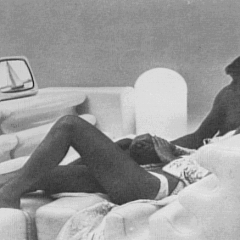
2 abordagens do desvio : Guy Debord e René Viénet
20 de março às 19h Palestra de Keith Sanborn A Internacional Situacionista inventou um monte de estratégias culturais. A principal entre elas: o desvio. A palavra faz o que quer dizer: ela reconstrói o sentido de um elemento cultural, recontextualizando-o, para refazer este próprio contexto. A palestra de Keith Sanborn explorará o emprego dessa estratégia no campo do cinema....
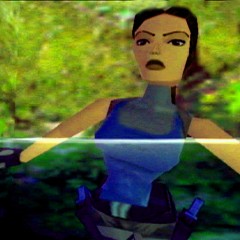
Peggy Ahwesh : The Third Body
video program by Peggy Ahwesh A program of short experimental videos that re-work outtakes, tourist video, videogame play, found footage and home movies in an effort to unpack the joys and sorrows embedded in our childhood memories, our archives and our attachment to objects. ‘It’s a place of memory and of forgetting —where perhaps only a cinematic map of objects will help the individual find his or her way out of their own psychic labyrinth.’ Bethlehem video, 8 min, 2009 Beirut Outtakes video, 7 min, 2008 Collections video, 6 min, 2012 The Scary Movie video, 10 min, 1993 She Puppet video, 18 min, 2001 the third body video, 8 min, 2010 Aptly described as a bricoleur, Peggy Ahwesh makes work that elaborates on the aesthetics of American avant-garde film in an investigation of cultural identity and modes of female subjectivity with a variety of formal approaches. Find her on the web at Senses of Cinema- Great Directors Critical Database, World Picture Journal and the Brooklyn Museum’s Elizabeth Sackler Center for Feminist...
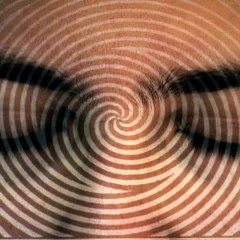
Peggy Ahwesh : O Terceiro Corpo
Programa de vídeo apresentado pela artista 19 de Março 19h Um programa de curtos vídeos experimentais que re-trabalham sobras de filmes, vídeos de turismo, de jogo de video, ou de películas encontradas e filmes caseiros, em um esforço para desembalar as alegrias e as tristezas embutidas em nossas memórias de infâncias, em nossas arquivos e em nosso apego aos objetos. “E um lugar de memória e de esquecimento, onde, talvez, apenas um mapa cinematográfico dos objetos vai ajudar o indivíduo encontrar o seu caminho fora de seu próprio labirinto psíquico.” Bethlehem video, 8 min, 2009 Beirut Outtakes video, 7 min, 2008 Collections video, 6 min, 2012 The Scary Movie video, 10 min, 1993 She Puppet video, 18 min, 2001 the third body video, 8 min, 2010 Apropriadamente descrita como um bricoleur, Peggy Ahwesh trabalha sobre a estética do cinema de vanguarda americano em uma investigação da identidade cultural e os modos de subjetividade feminina, com uma variedade de abordagens formais. Mais informações no web : http://sensesofcinema.com/2003/great-directors/ahwesh/, https://www.brooklynmuseum.org/eascfa/feminist_art_base/gallery/peggy_ahwesh.php...

Keith Sanborn : Energy of Delusion
March 15th Aptril 30th 2014 Opening March 15th from 5PM to 9PM Keith Sanborn is an american filmmaker who thought his works invest the question of representations shapen by the multiple uses of movie making. Artist and midia theoretician, since the 70’s he has questionned cinema in order to create field of thinking around the representation that are induces by cinema. In this way, cinema and memory of the cinema is taking a priviledged space within its own work. His strong attraction for diversion asserts itself throught his films and resonnate in the translation and film curating that he has made aound Situationism and Lettrism… His works is nourished by hacking and appropriation of iconic sequences of film such as The Zaprudder footage, or the Killing of Sadam Hussein, as much as it is with the appropriation of shots to who we do not pay attention to, being iflooded within the narrative stream of the film. The Gillian Hills Trilogy hightlights an underestimated actress. The filmmaker gives back to life part of a forgotten or deliberately disregard cinema history. His works offer new readings through film adaptations, decodifications of promotion films (such as in Operation double Trouble) or by using compression as transcriptions of keyworks of the cinema ( such an in Energy of Dellusion). For several years, the question of the history of the cinema became a major stake for the artist. In 1988 in a manifesto, hijacking Louis Lumière and Hollis Frampton, he wrote that ” the cinema is an invention without history “. Since then, his work focused on the possibility of realizing stories of the cinema, by sounding and by deceiving established film forms. So one might understand the use of the random forms chosse by the artist and that generate work without any ending. Two Installations Energy of Delusion This project of 60 one-minute films (2 minutes each with the titles), called “Energy Of Delusion” takes its title from Tol’stoy’s phrase, which became the title of Shklovsky’s critical magnum opus, where that one word, though never spelled out, might finally reach intuition. My aim is to create a highly compressed museum of cinema, consisting of some of the most notoriously engaging, difficult, and lengthy works of film history—those nearly invisible works that explore the limit conditions of film. Works that have become invisible precisely because of their status as “classics.” The experiment is to see just what comes to light when these works are compressed into a familiar yet brief span of time, where one might hold the whole film in memory at once, or refresh one’s memory in a Proustian rush...

La vidéo d’art sur Internet
Le cinéma expérimental et l’art vidéo percent sur la toile A l’heure où les plateformes de partage vidéo sont devenues les vecteurs d’une culture amateur, quelle est la place laissée à la vidéo artistique sur Internet ? La place de la vidéo d’art sur Internet ne se résume pas à un combat manichéen entre le géant YouTube et les portails institutionnels : son irrigation sur le web est beaucoup plus complexe et subtile, entre initiatives publiques et initiatives privées. Dernière en date, la création en octobre 2010 du portail public 24-25. Se définissant comme le « portail des images en mouvement », 24-25 joue le rôle de moteur de recherche au cœur des collections de sept associations qui œuvraient jusqu’alors chacune indépendamment des autres. Collectif Jeune Cinéma, Heure Exquise !, Les Instants vidéo, Light Cone, Le Peuple qui manque, Vidéoformes et Circuit Court sont les premiers à participer à ce projet dont l’envergure est à ce jour sans précédent en France. Au total, plus de 11 000 films sont ainsi disponibles. « On a participé au plan de numérisation du Ministère de la Culture, dans le cadre de programmes de numérisation des collections audiovisuelles françaises depuis 2005, explique Emmanuel Lefrant, directeur de Light Cone, avant de s’associer à d’autres associations audiovisuelles pour créer un portail. » D’autres catalogues devraient s’y rajouter courant 2011, parmi lesquels ceux des Archives Françaises du Film, du Centre National des Arts Plastiques-Fonds National d’Art Contemporain, du Centre Pompidou (département Cinéma et Nouveaux Médias), de Cinédoc-Paris Film Coop et de Pointligneplan. Est également prévue par la suite l’entrée des archives du Musée d’Art Moderne de la Ville de Paris, du MACVAL, de la Bibliothèque Kandinsky et du Centre Audiovisuel Simone de Beauvoir. A terme, 24-25 devrait être la plateforme incontournable pour accéder en ligne aux collections audiovisuelles françaises, publiques comme privées. En France, peu d’initiative publiques, une multiplicité d’initiatives privées Depuis 1998, il n’y pas eu d’autre initiative publique de cette ampleur. Cette année-là, le Musée National d’Art Moderne mettait en place une Encyclopédie des nouveaux médias, à partir de ses collections et de celles de quatre autres structures européennes (l’association bruxelloise CONSTANT VZW, le musée Ludwig à Cologne en Allemagne, le Centre pour l’image contemporaine à Saint-Gervais–Genève en Suisse et le Fonds national d’art contemporain en France). « Ce site a été conçu comme un outil d’information et de pédagogie qui doit donner envie de venir voir les oeuvres » déclarait alors dans Libération Christine Van Assche, responsable du département Vidéo et Nouveau Médias au Centre Pompidou. Numérisées pour la réouverture du Centre Pompidou en 2000, les œuvres vidéo sont en effet visibles dans leur intégralité sur les bornes multimédia du musée,...